










The Valley Forge 250th Commemorative Rifle
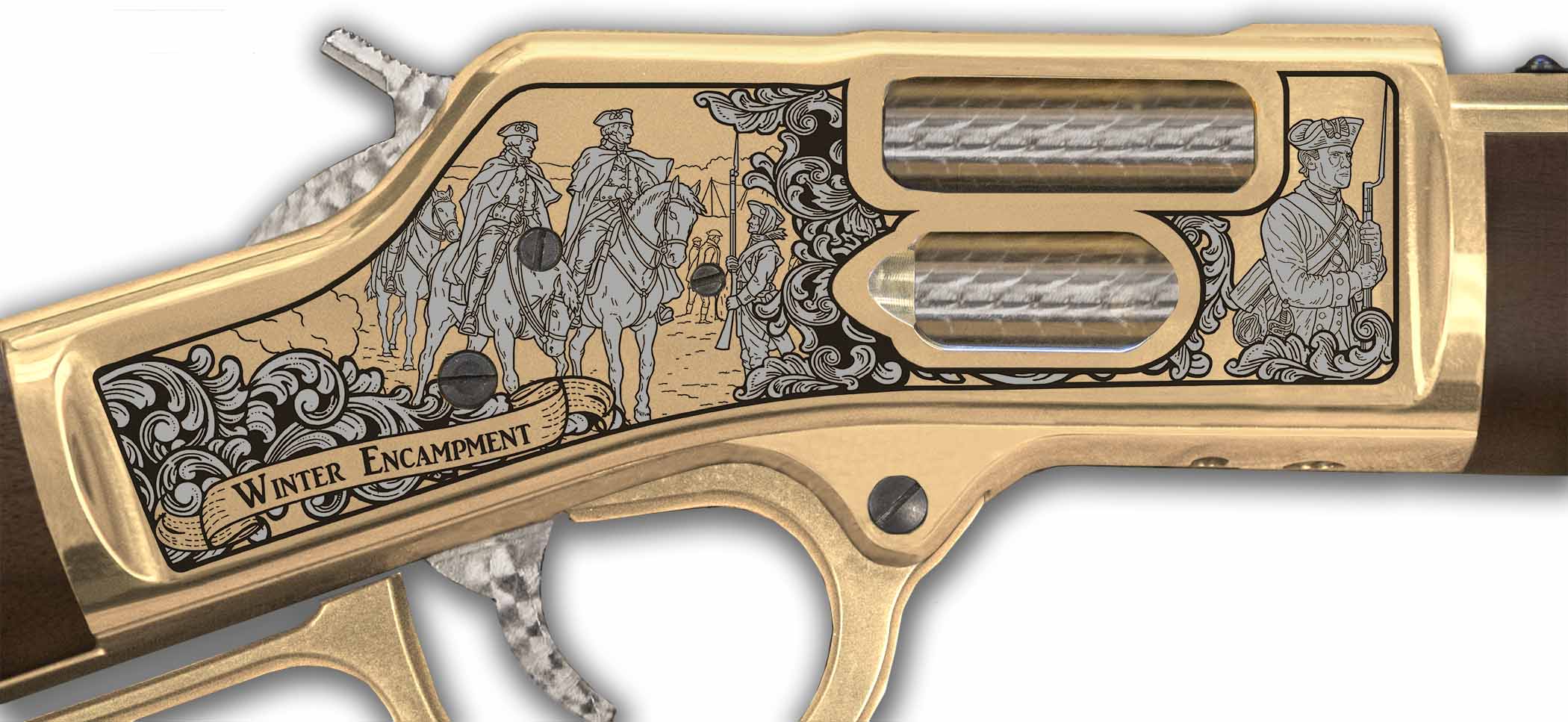
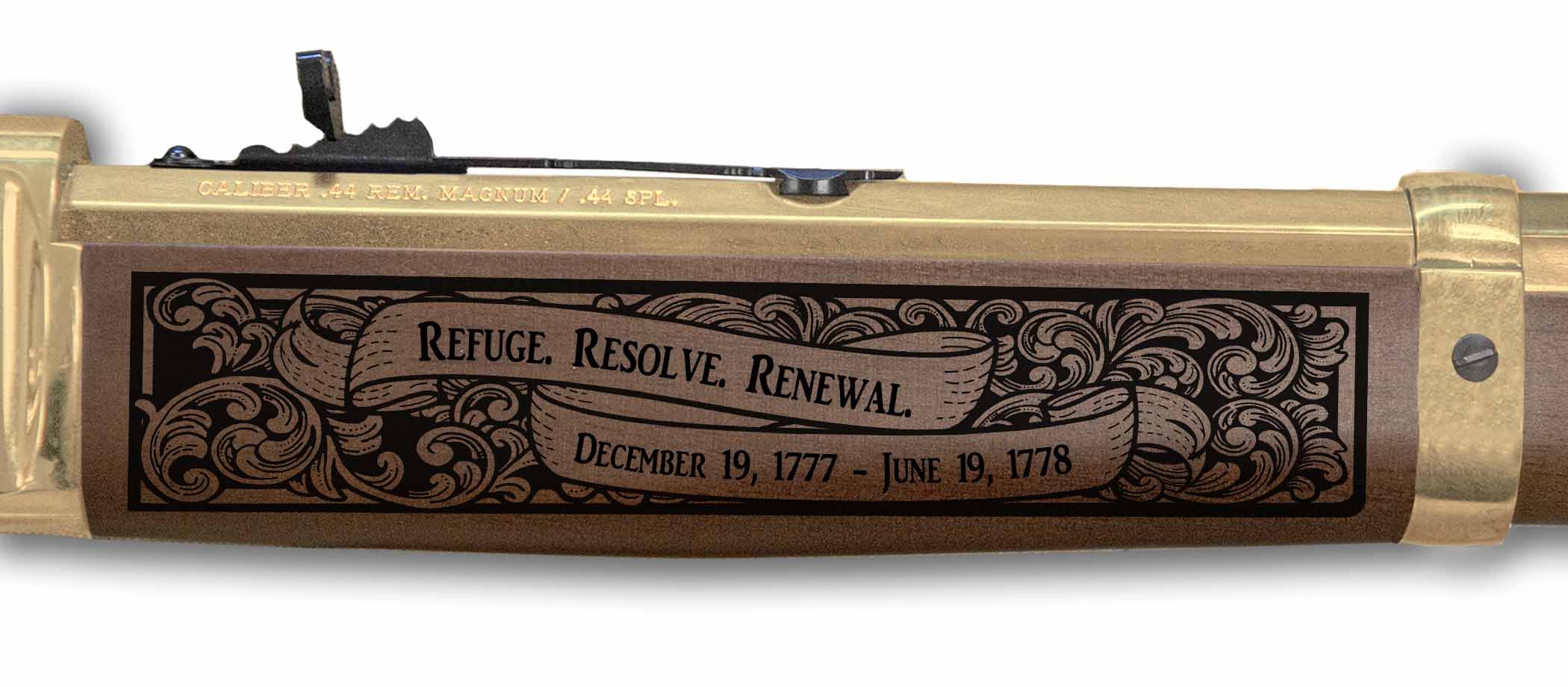
On December 19, 1777, 11,000 Continental Army regulars marched into Valley Forge, Pennsylvania, to establish winter quarters. Following devastating losses to the British in Philadelphia, the encampment served as a strategic solution to balance Congress’ demands for a winter campaign against the needs of Washington and his troops.
Regular freezing and thawing, plus intermittent snowfall and rain made conditions treacherous for the tired men. While a mismanaged commissary and Congress’ failure to provide the army with sufficient funds for fresh supplies led to widespread hunger and lack of clothing, shoes and other supplies.
Yet, bitter cold and starvation were only part of the ordeal, diseases like influenza, dysentery, typhoid and typhus killed two-thirds of the nearly 2,000 soldiers who died during the encampment.
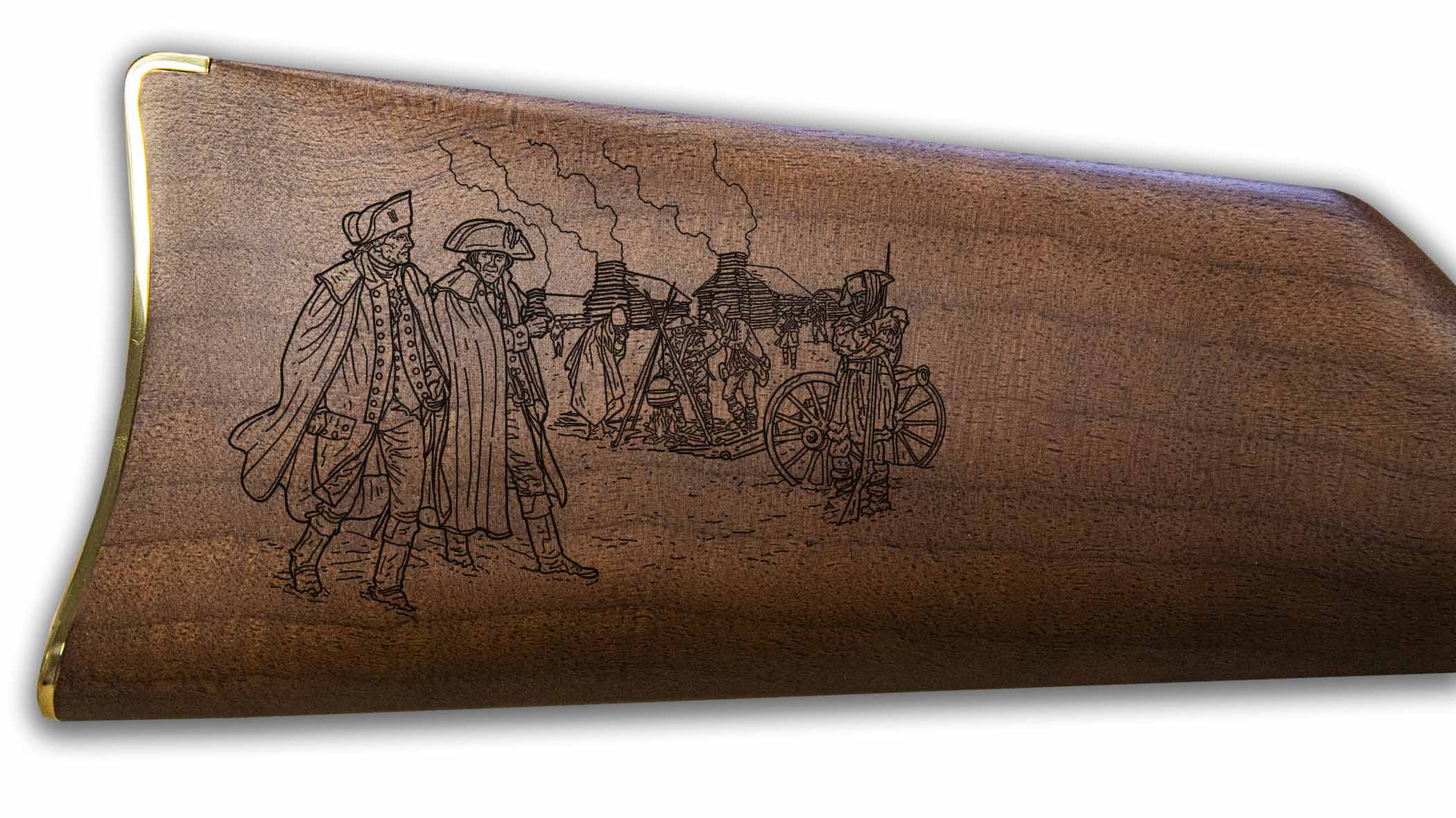
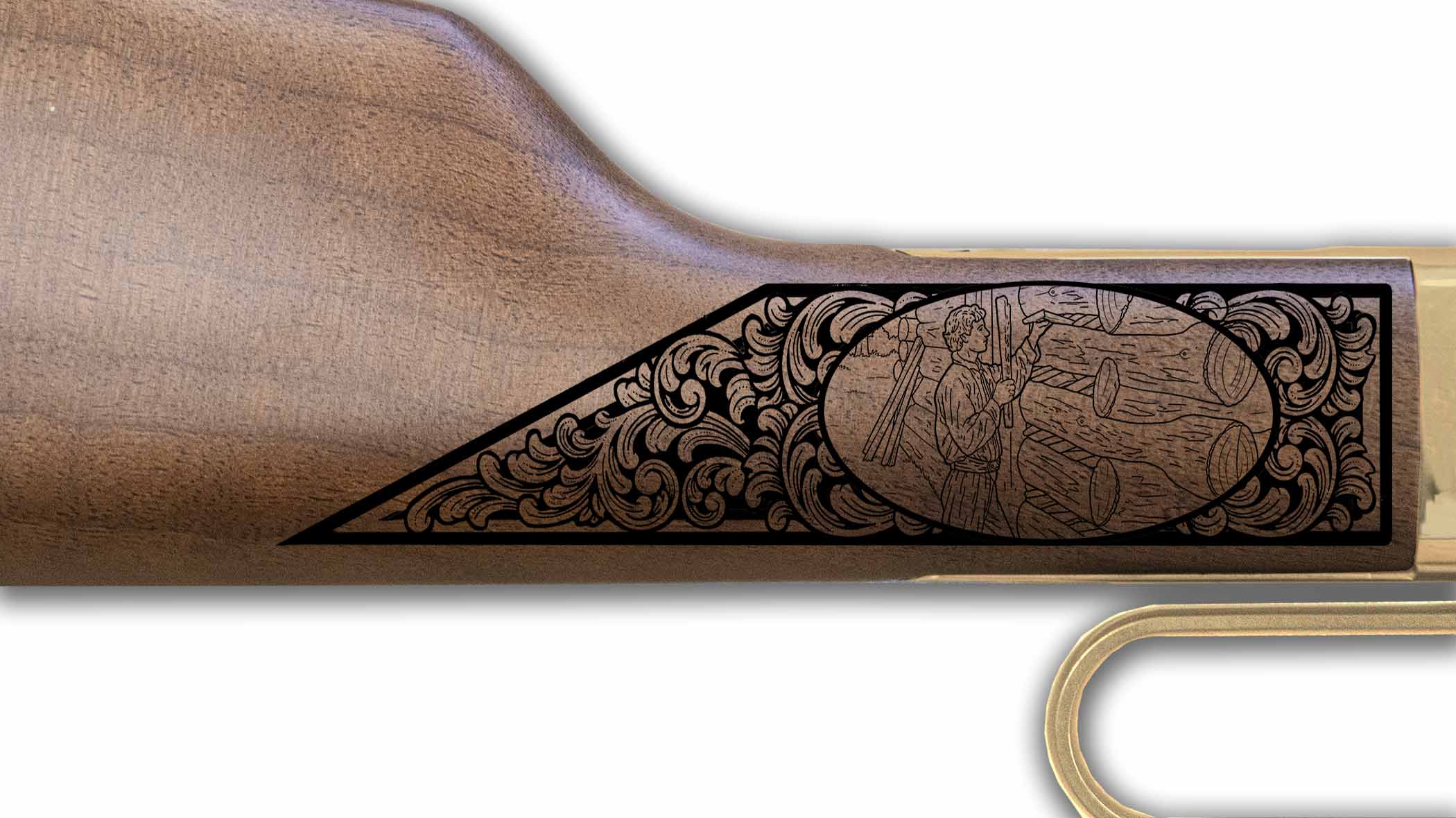
Rather than wait for deliverance, the army procured supplies, built log cabins for shelter, constructed makeshift clothing and gear, and cooked subsistence meals of their own concoction.
Valley Forge was the first winter encampment where hundreds of men had to build their own huts. The soldiers erected some 2,000 log cabins arranged in parallel lines, transforming the camp into a sprawling settlement that resembled a small village.
In February 1778, Washington welcomed Baron Friedrich von Steuben to the camp, a Prussian officer who put Continental troops through a new training regimen, including the precision marching that was essential to Revolutionary-era warfare.
“The genius of this nation is not in the least to be compared with that of the Prussians, Austrians, or French. You say to your soldier [in Europe], “Do this” and he doeth it; but [at Valley Forge] I am obliged to say, “This is the reason why you ought to do that,” and then he does it.” — Baron von Steuben
Von Steuben remarked on how quickly Washington’s men progressed in the retraining process, saying that it normally took two years to properly train a soldier. As spring wore on, whole brigades marched with newfound precision and tightly executed commands.
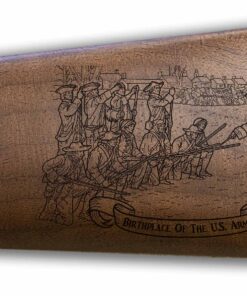
The military discipline instilled at Valley Forge is widely regarded as the birthplace of the American army. The concepts of basic training, the professionalization of the officer corps, and the rise of the army’s distinctive branches, such as the corps of engineers, all got their start here.
On June 19, 1778, exactly six months after they arrived, a revitalized Continental Army left Valley Forge and headed towards New Jersey. Barely a week later, they forced the British from the field in the Battle of Monmouth. The Valley Forge encampment proved to be a turning point in the Revolutionary War, testing the mettle of George Washington and his troops and paving the way for their ultimate victory in the war for American independence.
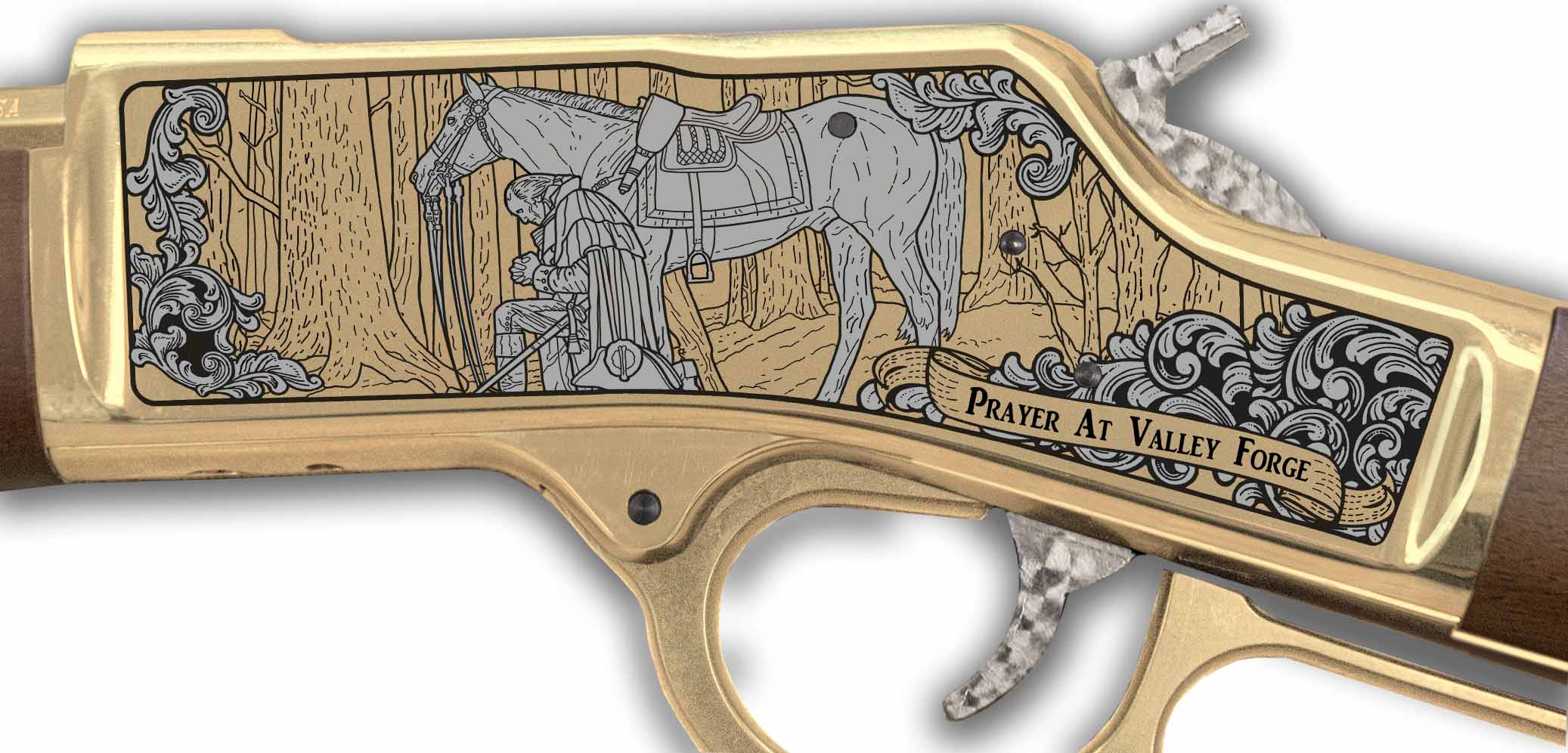
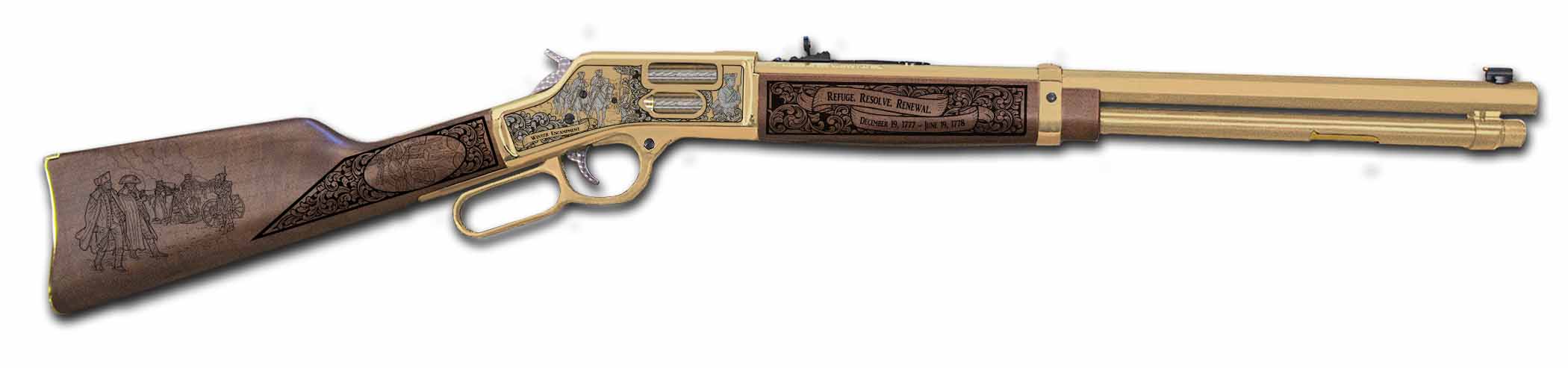
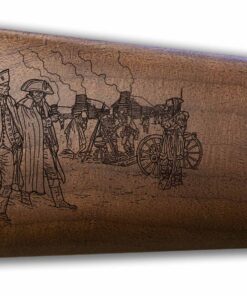
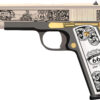
Presented on a Henry Big Boy Lever Action chambered in .357 Magnum/.38 Spl, this rifle features a 24-karat gold & selective nickel finish with ornately engraved artwork on the receiver and walnut stock. Limited to 50 numbered rifles, this edition is the perfect gift to commemorate your heritage and continue your legacy!
- Henry Big Boy .357 Magnum/.38 Spl,
- Limited to 50 Numbered Rifles!
- 24 Karat Gold & Selective Nickel Finish.
- Easy Payment Plans Available
CALL FOR PRICING AND AVAILABILITY!
Only 50 will be made!


